
Rhubarb Rheum x cultorum a favourite for people to grow in their gardens for culinary use. If you have never grown rhubarb before and want to start you can grow it from seed, it’s best to sow the seed in spring about 2.5cm deep in rows 30cm apart and then plant out the strongest ones in their permanent position in autumn or possibly the spring the following year.
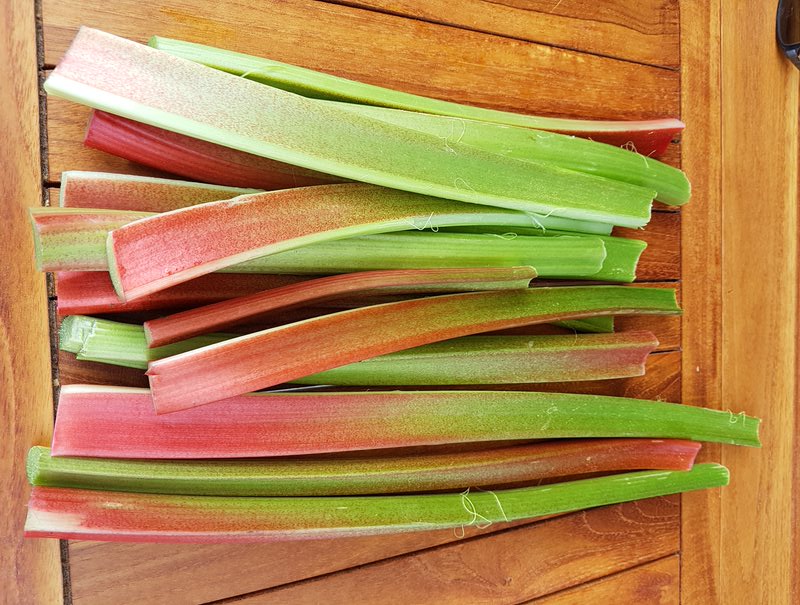
Often rhubarb is grown from a ‘set’ which consists of a fleshy rootstock and at least 1 bud, these are probably found in the garden centre in spring and autumn. Or you can ask a friend with a healthy plant that is at least 3-4 years old to separate a bud and some root for you to have to plant. Ideally, you should plant the set in the autumn, the dormant season, then leave it to grow the first year without picking any stems. In the second year you can pick a few but don’t go crazy and pick lots! It’s best to wait at least 3 years before you regularly pick the stems. When you have a set to plant dig into the ground plenty of well-rotted manure or organic matter/garden compost before you plant. It may also be a good idea to protect the plant from slugs with either a copper slug ring or some slug traps.
Stems are usually ready to harvest in spring and early summer. The best way to harvest is to pull each stem firmly from the base, giving it a slight twist as you do so; this is better than cutting the stems off the plant. It is also better to cut the leaves off the stems outside and compost them, they are not edible as they contain a high level of oxalic acid and will give you mild poisoning if you eat them. If you see a flower head sprouting then cut this off to avoid the plant going to seed and not producing more stems.
You should routinely cultivate the plant(s) by mulching them with a good dressing of manure or compost every autumn and spring, you can also give them a liquid feed in spring.
There are so many delicious ways to use rhubarb in the kitchen, some of my favourites are to roast it in the oven with some honey, ground ginger, cinnamon and a couple of cardamom pods then have it on yoghurt for breakfast or a cheeky lunchtime dessert.

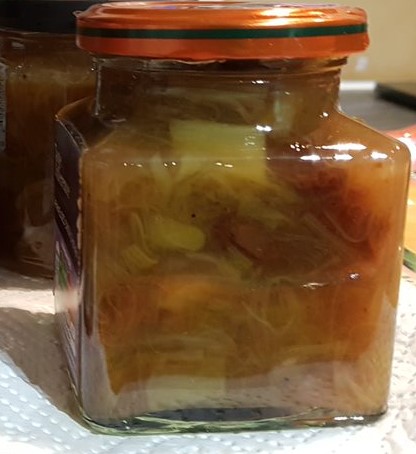
I absolutely adore my collection of River Cottage Handbooks by various authors introduced by Hugh Fearnley-Whittingstall. In No.9 Fruit there is an amazing recipe for Rhubarb and Strawberry Tart, which is a must to try. Spring Rhubarb Relish from the Preserves Handbook is also a great way to use rhubarb and lovely to serve with cheese.
You can also make rhubarb gin, ideally you want the nice early pink stems so they make the gin go a lovely pinky colour. Simple to make and delicious to drink!
Don’t forget you can cook and freeze rhubarb if you can’t eat it all, I often roast then freeze batches if it to take out and enjoy through the winter.
 The Alpine Gardener